
|
If you want more living space and a stronger resale position, a loft conversion often delivers both — well-designed conversions typically increase a home’s value by around 10 to 20%, and can even add more in properties with limited ground-floor space.
A thoughtful loft conversion that adds a double bedroom and a bathroom can lift your property value significantly while giving you usable, flexible space. This Blog post will guide you through the factors that determine how much value you’ll gain, compare different conversion types and costs, and highlight design choices that maximise long-term benefits so you can decide whether a loft conversion makes sense for your home and budget. Key Factors Influencing Property Value These are location, workmanship and the amount of practical, legally usable space you add drive most of the value change. Each factor below affects buyer appeal, resale price and how quickly you recoup costs. Location and Local Market Trends Where your house is located determines the baseline uplift potential. In high-demand urban areas like Liverpool and St Helens, or commuter towns like Knowsley and Sefton, with low supply, buyers pay a premium for an extra bedroom and bathroom; research frequently cites uplift figures in the mid-teens to low-20s percent for well-executed conversions in such markets. Make sure to check recent sold prices for similar-sized homes in your postcode and the time properties spend on market to estimate attainable value. (Zoopla and Rightmove are good sources). Local planning norms and conservation areas matter. If your street has many period properties or is in a conservation area, permitted development rights may be restricted and buyers may prefer restorations that match local character. Also consider rental demand: a loft that creates a self-contained space or additional bedroom can increase rental yields in areas with strong tenant markets. Quality of Loft Conversion Work Quality affects buyer perception and valuation far more than finish price. A professionally designed and inspected conversion with full compliance to building regulations reassures buyers and lenders, who may value the added room more if paperwork and fire safety measures are complete. Check out our site at https://www.liverpoolconversions.co.uk/ for more information about this. Focus on structural integrity, insulation, soundproofing and proper egress (windows/staircase). Poorly executed conversions can reduce value or complicate sales. Use reputable trades, an architect or structural engineer where needed, and retain certificates (building control, electrical). Small visible details—neat joinery, consistent flooring, integrated storage and sympathetic rooflines—increase perceived value and help justify a higher asking price. Size and Usable Space Added Not all added floor area yields equal value. A conversion that creates a full-sized double bedroom plus an ensuite and built-in storage typically adds more value than a cramped loft with low headroom. Aim for practical metrics: minimum clear headroom, a comfortable staircase pitch, and usable floor area that flows into the rest of the house. Consider the mix of rooms you create. Adding a bedroom and bathroom often delivers stronger returns than non-habitable storage space. Also weigh the loss of loft storage; buyers may penalise properties where everyday storage is sacrificed without alternative solutions. Types of Loft Conversions and Their Impact Each conversion type changes usable floor area, head height and natural light in different ways, which in turn affects cost, planning requirements and the likely uplift to your property's value. Dormer Loft A dormer creates vertical walls and a flat roof projection to add standing room and floor area. You typically gain a rectangular room that runs along the roofline, making it ideal for a bedroom, en‑suite or home office where floor space and head height matter. Costs are moderate compared with more complex conversions, and many dormers fall within permitted development rules — but check local planning where terrace or conservation areas apply. Value impact: dormer conversions often deliver strong return on investment because they create clearly usable rooms without changing the building footprint much. Considerations: window placement affects light and ventilation; insulation and fire escape routes must meet building regs; joinery and external finishes should match existing roof materials to avoid negative curb appeal. Mansard Loft A Mansard conversion steepens the roof at the rear and forms a near‑vertical wall, maximising internal volume across the whole top floor. You gain the most usable space and often nearly a full storey’s worth of accommodation, which suits large bedrooms, multiple rooms or self‑contained flats. This is the most costly option and commonly requires planning permission, especially because it alters roofline and external appearance. Value impact: Mansard conversions usually add the highest capital value per square metre because of the substantial extra floor area and potential for additional bedrooms or separate units. Considerations: structural works are extensive; party wall agreements may be needed on semi‑detached or terraced properties; landscaping or neighbouring views can influence planning approval. Hip-to-Gable Conversion A hip-to-gable conversion transforms a sloping hip roof into a vertical gable, extending the roof ridge and creating a larger loft footprint. It works best on semi‑detached and detached homes with hipped roofs and gives you increased width and headroom on one side. Costs sit between dormer and Mansard conversions; planning permission may be needed depending on your local authority and the scale of the change. Value impact: this conversion often adds significant value because it creates sizeable, usable rooms and can accommodate en‑suites or separate rooms without the visual bulk of a Mansard. Considerations: structural reinforcement at the new gable is required; matching brickwork and roof tiles keeps the exterior coherent; noise and party wall issues may arise on adjoining properties. Cost Versus Value Added A loft conversion typically requires a meaningful upfront spend but can unlock one or more additional usable rooms. You should weigh build costs against likely value uplift in your area and the disruption during construction. Typical Conversion Costs Expect a basic rooflight conversion to start around £15,000–£25,000 for simple insulation, flooring and windows in many UK towns. A rear dormer or mansard conversion normally ranges from about £30,000 to £60,000, depending on structural works, stair insertion and bathroom fit-out. Costs you must budget for: Structural work: steel beams or joist strengthening can add several thousand pounds. Planning and building regs: party-wall agreements, drawings and inspections typically cost £1,000–£3,000. Services: electrics, plumbing and heating extensions commonly add £3,000–£8,000. Finishes: flooring, built-in storage and en suite bathrooms drive final costs. Labour rates, access difficulty and location (London versus provincial towns) are the biggest variables. Get at least three detailed quotes and itemised costs before committing. Potential Return on Investment Typical value uplift figures in the UK fall between about 10% and 25% of your existing house price, with dormer and mansard conversions toward the higher end. In numerical terms, that often equates to an increase of £20,000–£100,000 depending on size and location. Consider these points when estimating ROI: Local comparables: properties with an extra bedroom nearby set the ceiling for uplift. Quality of finish: buyers expect good insulation, headroom and natural light; poor finishes reduce value. Cost-to-value ratio: aim for value uplift at least 1.2–1.5× your build cost to justify disruption and investment. Market and house type: terraced houses in commuter towns often convert more value per £ spent than large detached homes in rural areas. Use a local estate agent’s comparables and a builder’s fixed quote to model likely net gain before you start. Design Considerations That Maximise Value Focus on practical choices that buyers notice: light, headroom and legal compliance. Prioritise durable finishes and layouts that suit likely buyers — for example, an extra bedroom or a home office with ample storage. Optimising Natural Light Place rooflights and dormers where they deliver usable light to the main living or sleeping area, not just the landing. Choose top-hung or centre-pivot rooflights for ventilation and unobstructed views; aim for glazing that faces south or east where possible to increase daylight without excessive overheating. Use full-height glazed gables or a combination of rooflights and glazed dormer fronts when you need wider light spread across the room. Specify low-E double glazing with a U-value of 1.4 W/m²K or better to balance light with thermal performance. Consider built-in storage under eaves to keep floor space clear and allow daylight to penetrate the room. Mind internal finishes: light-coloured walls and reflective surfaces amplify daylight. Add zoned lighting for evenings and ensure window placement supports the intended function — a desk needs clear daylight, while a bedroom benefits from controlled light and blackout options. Ensuring Compliance with Building Regulations Start with structure and fire safety compliance: confirm joist and rafter strengths for the new loads and factor in a proper stair head height and 2m clearances where possible. Engage a structural engineer early to produce calculations for roof alterations and floor strengthening; submit these with your building regulations application. Follow means-of-escape rules: provide protected escape routes, fire doors where required, and an escape window with a minimum clear opening of 0.33m² and at least 450mm high and 450mm wide if used as a bedroom. Install mains-powered smoke detectors interlinked with battery backup across floors. Document insulation and ventilation performance to meet current Part L and Part F standards. Keep records of all certificates — structural sign-off, glazing safety, and electrical and gas work — to evidence compliance for future buyers and surveyors. Long-Term Benefits Beyond Valuation You gain practical, day-to-day advantages that improve how your home works and performs to what you desire. These improvements affect comfort, running costs, and how easily the property adapts to future needs. Enhanced Liveability and Functionality A loft conversion typically adds a fully usable room—often a double bedroom with an en-suite or a dedicated home office—which directly increases living space without moving house. You get more private sleeping accommodation for a growing family or a quiet workspace that separates work and home life. Think about storage too: built-in eaves cupboards and bespoke joinery transform awkward roof spaces into organised storage, reducing clutter downstairs. Good layout choices, like a separate shower room and sufficient head height, make the new space genuinely functional rather than a token addition. Natural light and ventilation matter. Installing roof windows or dormers boosts daylight and air flow, improving mood and reducing reliance on electric lighting during the day. If you plan for adaptable use—guest room, rental space or nursery—you future-proof the property for changing needs. Energy Efficiency Improvements A properly insulated and certified loft conversion can lower your heating bills. Adding modern insulation to the roof and party walls, upgrading glazing to double or triple panes, and sealing thermal bridges reduces heat loss through the roof, which is one of the major areas of heat transfer in older homes. You can also integrate energy-efficient fittings—LED lighting, low-flow hot-water fixtures and an efficient boiler or heat-pump connection—to cut running costs further. Consider installing solar PV on a south-facing roof plane created by the conversion to offset electricity use. Make sure you obtain the necessary compliance documentation (building regulations sign-off and any new EPC rating). Those documents not only ensure the work meets safety and performance standards but also make the energy savings and insulation improvements clear to future buyers or tenants. For more information on our various Conversions check out our site Loft Conversion Liverpool, or give us a call on 0151 380 0001 Liverpool Conversions 114d Imperial Court, Exchange St E, Liverpool L2 3EB 0151 380 0001
0 Comments
Roofing material is an important consideration when converting your loft in Liverpool. If you have a sloped roof, tiles or shingles may be the best option. If your roof is flat, a membrane roofing system may be a better choice. Talk to the company about your options and they can help you choose the best roofing material for your home.
Plumbing is also a consideration when planning a loft conversion in Liverpool. You will need to make sure that the water and drainage systems can accommodate the extra space. The company can help you plan the layout of your new loft and ensure that all the necessary plumbing is in place. Electricity is another important consideration. You will need to make sure that the wiring can accommodate the extra space. A Loft Conversion Company in Liverpool can help you plan the layout of your new loft and ensure that all the necessary electrical is in place. Liverpool Conversions 114d Imperial Court, Exchange St E, Liverpool L2 3EB 0151 380 0001 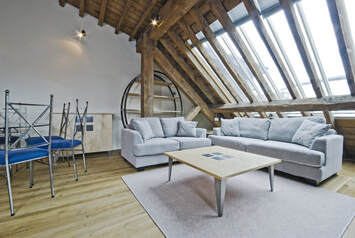 Are you thrilled about the possibility of expanding your living space with a loft conversion in Liverpool? This can not only increase the value of your property but also provide more room for you and your family to enjoy. However, it's vital to select a skilled specialist who can deliver exceptional results. When making a purchase, many people rely on recommendations from the seller. Whether it's through online testimonials, Google ratings, or word of mouth, it's always reassuring to hear from satisfied customers. The same principle applies to choosing a company for your loft conversion project. Here are 7 reasons to use a recommended loft conversion specialist: 1. Are you ready to receive expert loft conversion services from the best in the business? While general builders may have the necessary skills to convert a loft space, nothing compares to the knowledge and understanding of a recommended loft conversion specialist. These professionals are known for their exceptional work quality and will take your project to new heights! 2. With years of experience and an in-depth understanding of every aspect of loft conversion design and construction, reputable loft specialists are the way to go. They've tackled a variety of projects and can guide you through any challenges that may arise during the conversion process. Trust us, their expertise means that your loft conversion will exceed all your expectations! 3. Get ready for some top-notch craftsmanship! Recommended loft conversion specialists take immense pride in their work and strive for exceptional results. Using only the best materials and working to the highest professional standard, your loft conversion will be built to last. With a 5-star rating on Google from over 200 satisfied customers, over 100 5-star reviews on Facebook, as well as numerous case studies and testimonials from happy clients, their quality service speaks for itself! You won't be disappointed. 4. You won't believe what the top-notch loft conversion specialists can do for you! They're not just builders, but also incredible designers who can bring your loft ideas to life. From the initial planning stages, they work closely with you to ensure that your vision is executed to perfection. If you're not sure about what you want, don't worry, the specialists are full of creative suggestions to help you out. Once the construction is complete, they can also take care of the interior design and painting and decorating. It's like having an entire team of experts working on your project! And the best part? They offer free decoration services on all their loft conversions. Whether you have your own designs or need recommendations, their architects, structural engineers, and decorators are flexible and ready to provide you with the best possible result. With their help, you can finally have the loft you've always dreamed of! 5. Great news! You can rest assured that your loft conversion is in safe hands! Our recommended loft conversion specialist will ensure that your new living space meets all the specific building regulations and safety standards required for the job. We'll even handle all the necessary paperwork and planning permission requirements so you don't have to worry about a thing! 6.And that's not all! You'll also receive peace of mind with our loft conversion insurance and guarantees. Our reputable loft conversion specialist has got you covered with public liability insurance, which covers any damage or injury caused during the work. Plus, we're proud to be full members of the Federation of Master Builders, which means you'll receive a 10-year guarantee on all our loft conversions. Don't wait any longer to create your dream living space - contact us today! 7. Are you thinking of converting your attic into a beautiful living space? Look no further! Our recommended loft converters provide exceptional customer service that you'll surely love. They're not only highly recommended for their quality of work but also for their commitment to providing an excellent client experience. They'll keep you in the loop throughout the process and will address all your concerns and queries. This means you can sit back, relax, and enjoy the exciting journey of transforming your attic into a stunning new living space. We're so passionate about delivering outstanding results that we assign a dedicated Team Leader to every project and have a quality control team that visits the site regularly to ensure everything meets our high standards. Don't just take our word for it, check out our testimonials and see for yourself! If you're ready to turn your dreams into reality, get in touch with us today for a free, no-obligation consultation. We can't wait to help you bring your vision to life! Give us a call on 01513800001 Liverpool Conversions 114d Imperial Court, Exchange St E, Liverpool L2 3EB 0151 380 0001 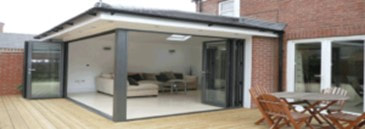 As it's the start of the year, most people are looking for fresh starts and where could be a better place to begin than with a Garage Conversion. Whether you are simply looking for a part conversion or maybe a total overhaul, this article will provide you with ideas and inspiration to get you started. It can also be used as a study or playroom for instance.
Before you embark on your building project the first thing you or your chosen builder should do is check that your existing foundations are secure. They should be directly under the outside walls. You’ll find that a large proportion of foundations are generally not positioned properly. Next you should check for the damp proofing, as if you miss out on damp proofing your home properly you will find that you soon have damp rising which will cause severe problems. Make sure that all electric cables are protected by the right covering. This is really important for many reasons the main one being safety of course. The new floor should be at the right height, if not your doors and your windows will also be at the wrong height. A reputable builder will know to avoid these mistakes but if you are doing a lot of the work on your Garage Conversion yourself it is advisable to make these checks yourself. You should Make sure that you order enough materials before you begin as it is difficult to find matching bricks etc if your supplier runs out. The kitchen is one of the most favourite rooms to renovate and there are many reasons for this, including outdated cupboards and appliances to a change of living circumstances for example a family with older children may want to renovate the kitchen area into a place of entertainment. Examples include knocking down an internal wall for example a dining room situated beside the kitchen so as to make one big kitchen area. This really opens up the space and allows you to entertain while cooking, making it an ideal room for big homely family gatherings. If your budget allows you could bring an experienced professional on board such as an interior designer who will help you to plan your space in an optimal and aesthetic way. Another very popular choice among people in terms of home renovations, is converting a spare room into an office space or a nursery for a new baby. This is particularly common among new couples who have begun to start a family and want a practical space to look after their new arrival. Converting a room into a nursery needn't be as daunting as one would expect and will actually reduce your stress levels when the new arrival is welcomed home. It also mentally prepares you for the change before the pitter-patter of little feet can be heard about the place. Once you have created the space, you are already making room for the little one in your life so that by the time he or she arrives it will be like he or she has always belonged there. Whatever Garage Conversion in Liverpool you are planning to do, it is always wise to consult with a qualified professional first, who can give you an ideal time scale, offer budgetary decisions and also make the home improvements as safe and smooth as possible. Everyone likes to dabble in a bit of DIY but for such a big job as a Garage Conversion, it makes sound sense to bring the experts on board, which in the long run will actually save you time and money especially when you want to get the job done right first time! For more information on our various Conversions check out our site, or give us a call on 0151 380 0001 Liverpool Conversions 114d Imperial Court, Exchange St E, Liverpool L2 3EB 0151 380 0001 There are several types of loft conversion and they include the following listed:
Velux loft conversions When rooflight is synonymous with Velux as far as loft conversions are concerned. This stems from the fact that for over 60 years, Velux has been the foremost manufacturer of roof windows. One unique benefit of this type of conversion is the fact that you may not necessary have to obtain planning commission from your local authority before you can use it. Among the different loft conversion types, it is also confirmed to be more cost effective. This type of conversion is fitted to align with the roof line while at the same time, leaving untouched, the existing roof structure. One of the major reasons why it does not cost much to carry out is mainly because the roof does not need to be extensively altered to get what the property owner wants, and the fact that the loft does not extend beyond the original line of the roof minimizes the possibilities of obtaining permission from the local planning authorities, though it is advised that you still check before carrying out any of the four types of loft conversion. The Velux roof conversion is mainly used on property that has enough headroom or where planning constraints especially in the conservation areas. Where the headroom is not spacious enough, then the property owner can settle for mansard or dormers, which are other conversion types that normally serve as better options in cases of limited headroom. The fitting of Velux rooflights on these conversions are fast and simple reducing the chances of the installation being inhibited by bad weather or any other natural conditions. In carrying out a Velux conversions, the windows are not vertically installed rather they are installed at the roof angle which makes it possible for the window to let in enormous amount of sunlight. Though this is a good thing especially as it will help the room to be illuminated and airy but it actually becomes a problem during summer or at night. For this reason, window blinds need to be installed. There are various window blinds that are designed to fit into the various types of conversion including of course, the Velux conversion. You many even settle for thermal silver backed blinds which are designed to retain heat in the room during winter and during summer, it keeps the heat out. The wonders of technology I hear you say. If you do have that spacious space on your property. Dormer loft conversions What is a dormer loft conversion? This is an extension that is made to an already existing roof which allows additional floor space and headroom, all within the same space. They usually project from the slope of the roof mostly at the rear end of the building and can be done in various styles. Inside it, the ceiling is built horizontally while the walls are vertical. If your loft is limited in space, then dormer conversion is the safest bait when it comes to the various loft conversion types. If you decide to go for a flat roof dormer, it should be noted that although you will get enough space within the loft but outwardly, they are unattractive as far as your property is concerned. This is the reason why most people who have more money to spend would go for the gable fronted and hipped dormers since they appear more attractive but you will get less space within the conversion coupled with the fact that it will cost you more, owing to its complexity in design. Mansard loft conversions This is another of the type of conversion obtainable from roof designers today. A mansard roof comes with double slopes with both closer to each other. It got its name from Francois Mansart, a 17th century French architect (1598-16666). It was so named because most of his buildings had this unique roof design. One great advantage of the mansard loft conversion is the maximum space obtainable from the loft. The builder raises the gable walls on both sides of the property to get the desired space and then proceeds to creating the timber frame for the conversion. This type of loft is mostly seen on older properties. People in the suburbs prefer the flat roof dormers. If among the mentioned type of loft you desire to carry out the mansard loft, it should be noted that permission will have to be obtained from your local planning authorities. Our aim is to work closely with you and give our undivided attention throughout the entire project. We provide our unique service to all inside the Merseyside Area. Liverpool Conversions 114d Imperial Court, Exchange St E, Liverpool L2 3EB 0151 380 0001 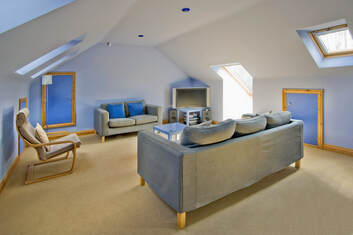 Unused lofts in UK houses are a perfect place for having an entertainment room. Many of the loft conversions in Liverpool take place in order to create an entertainment room. There are several reasons for this. First of all the attic is nearly always completely detached from the rest of the house except for a staircase which enables a group of friends to have a get together in it without giving any sort of discomfort to the rest of the house.
If the floor space in the loft is very large, several different items can be installed during the loft conversion such as a dance floor and a DJ stand. Alternatively there can also be a large screen along with seating for a few persons which would enable a group of friends to get together to watch a movie. Also, many of the conversions that take place in Liverpool are in order to enable a group of friends to get together and have a party. Thus a multi-speaker setup is usually customary for such an arrangement. Companies that offer loft conversions in Liverpool also often deal with consumers who want to install indoor games such as Pool and table football in their attics. Along with these games table tennis is also popular. If the attic space is large enough, a badminton court can also be set up. These indoor activities help in bringing the family closer together and are also a good way to pass time with friends. Thus, turning your attic into an entertainment room will provide you with a very good space for passing time with others, especially your friends and family. Liverpool Conversions 114d Imperial Court, Exchange St E, Liverpool L2 3EB 0151 380 0001 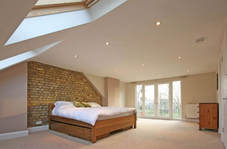 Before you go ahead and start work, companies offering loft conversions in Liverpool, we suggest that you should first plan the entire process in detail. First of all you should decide on the intended purpose of the room that would be created. If the room is going to be a bedroom, you should see if an attached toilet is a feasible proposition or not. If the toilet can be made without any major expenditure and within budget, you should reserve some space for it.
You should also decide what to do with the stuff that is already in the attic. Usually people do not throw away everything that they have stored and do not decide beforehand where will the stuff go after the conversion has taken place. Firms that carry out loft conversions in Reading suggest that you should sort out all the stuff in the attic so that you may know beforehand how much space you should reserve in the new room that you are going to create. You should also decide how you will store the goods, meaning should you create a storage cupboard or should you create a small partition at one corner of the room for the goods. Before work starts, it is a good idea to plan ahead and buy all the fixtures that you intend to place in the converted loft. An example would be a computer that you plan to put into the room. This enables firms, such as those carrying out loft conversions to create power outlets for the computer in the intended location and this gives a neat look to the completed room. For more information on converting your loft in Liverpool or if you're curious how much does a loft conversion cost, visit our site https://www.liverpoolconversions.co.uk Liverpool Conversions 114d Imperial Court, Exchange St E, Liverpool L2 3EB 0151 380 0001 |
|
|
|
Copyright © 2024 Liverpool Conversions All Rights Reserved |
